


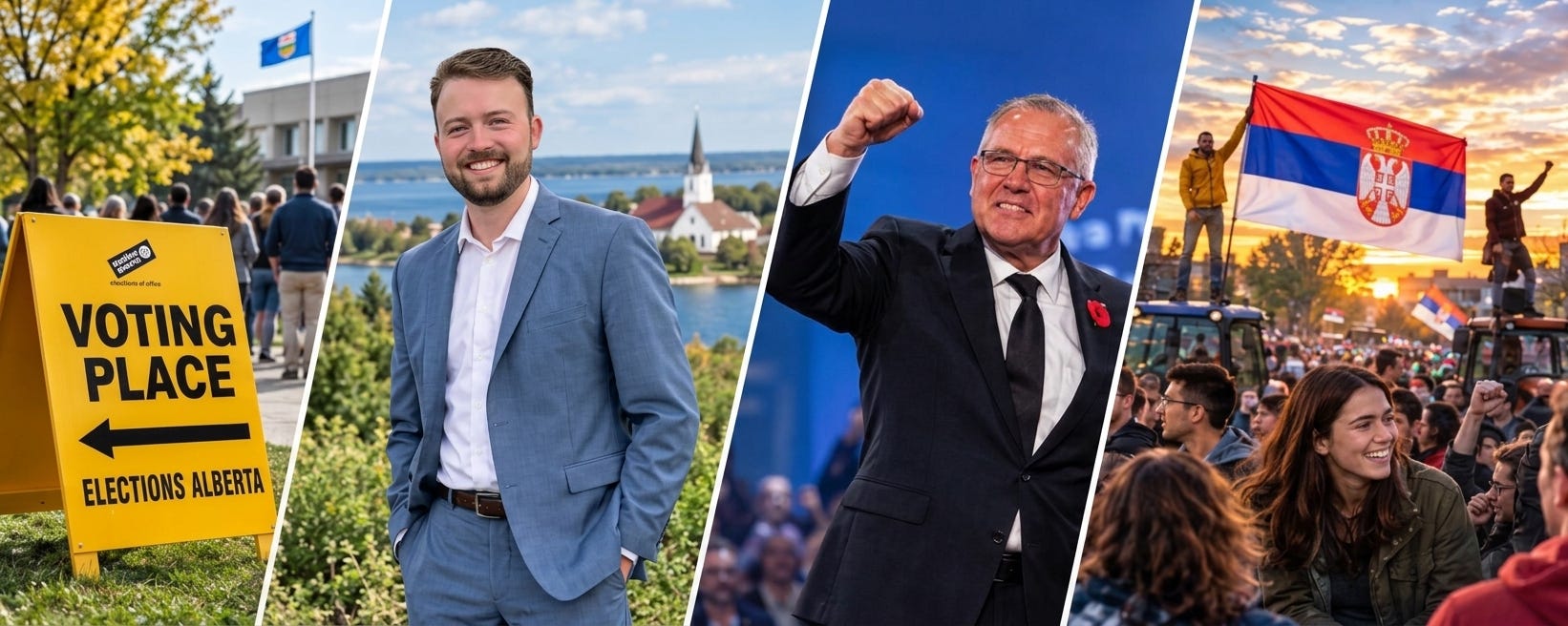
We keep being told we’re more divided than ever, but everywhere I look this week, I see the opposite. Whether the Toronto mayoral race left you celebrating or disappointed, I’ve been running through constant examples of good news and wins small and large, and I want to share some of that encouragement that has me feeling so hopeful on a dark and damp October morning.
I am just getting back from spending the weekend in my neighbouring province of PEI, where I had the pleasure of moderating a panel discussion for the Cardigan EDA. The EDA president is a young man in his 30s working to breathe new life into his party, and the nominee for nearby Egmont is in his 20s. That’s a real change for a party whose organizing ranks have long skewed 50-plus. There were also two gentlemen in the audience in their 80s, sharing stories about the area and the people who had represented it, including who had done a good job and who hadn’t. That kind of knowledge gives young people, who have the energy to fight, the wisdom not to make the same mistakes as their predecessors, and to build on what is tried and true instead. The only way to know that is to have been there. Seeing them show up to support these young guys was so encouraging, and it left me thinking this is how we need to organize. We need to create the space for mentorship and stop dividing the youth from our elders with meaningless generational stereotypes of Millennial vs Boomer. The folks in Cardigan are building something that is an inspiration for those seeking to do the same.
On the national scale, what has taken place in Canada over the past two weeks gives me real hope that we have more in common than we think. In the Alberta referendum, 25% of Albertans still voted to begin a process of separation, yet all five immigration questions passed with around 55% support. That means a good number of those who voted to stay in Canada still recognized there is room for improvement on this file. Despite campaigning from all sides, including our own Prime Minister urging “No to the Nine,” a sentiment echoed by the provincial NDP, and the largest separatist group telling its supporters to ignore those questions entirely, Albertans were able to cut through the noise and vote together. If you have a reason that ties people together regardless of political affiliation, that message can get through and you can catalyze change.
We shouldn’t lose hope or regard the other side as stupid or beyond reach when we can see that change can happen if we hit the right message.
As a reformist at heart, I was disappointed to see the constitutional questions on the Senate, judicial appointments, and federal programs defeated, with the Senate question coming within about five points. But what that tells me is that it’s more about what people think is within their power, and a bit about scarcity. People are struggling, so abolishing the Senate, changing how judges are appointed, and changing government programs can feel like nice-to-haves, and may even feel threatening to those relying on support in these challenging economic times. That said, the immigration result is yet another clear example of how working together can move the needle and send a message.
Continuing to move across the country, this weekend we saw the BC Conservatives, who lost their leader two days before the writ dropped, run a 32-day campaign and win a majority government for the first time in almost a century. It was a stunning rebuke of a government that called an election two years early to take advantage of its opponent’s disorganization and instead suffered one of the most historic defeats since 2001. While some may argue about the purity test of this new conservative party, I look past the party colours and focus on what voters were telling us. Midway through the campaign, 60% of British Columbians said they were unhappy an election was happening at all. The sitting government focused on division and tried to tie their opponents to outside forces, and still the people of BC saw through the politicking. The outgoing premier leaned on the trade war, with Adam Stirling of CFAX 1070 Victoria counting him saying Trump at least 123 times across press conferences during his month-long campaign, instead of focusing on the people he was meant to serve. Once again, people cut through the noise and came together around what mattered to them: an affordability crisis and an election most didn’t want. It’s a clear message that people can discern fact from fiction and can tell when the trade dispute is being used as an excuse.
The last example I will provide is from overseas. In November 2024, the canopy of the newly renovated train station in Novi Sad, Serbia, collapsed, killing 16 people. It was widely believed to have happened because of corruption in the ruling Serbian Progressive Party. Beginning with university students and eventually including the wider public, people came together to demand accountability and transparency from their government. When the governing party refused, and the students lost faith in the opposition parties, this highly motivated group formed their own citizens’ list featuring professors, teachers, former athletes, and experts as candidates from across the political spectrum. When they needed signatures to get on the ballot, people across the country stood in line for hours to sign. Despite living in a country where the media is almost completely controlled by the government, and facing detentions and surveillance along the way, people cycled across the country carrying copies of Serbia’s Constitution to reach voters in person.
They didn’t give up because the media was biased, they worked around it to connect with their communities directly.
And on October 25, 2026, this movement won a majority of seats and ousted the Serbian Progressive Party. The defeated leader blamed an “American deep state,” the independent media, and other European countries, but that night fireworks lit up the sky as tens of thousands filled the streets. They won because they came together and found ways around every barrier in front of them, be it corrupt or ineffective politicians, media that refused to report fairly, or their own political differences.
So what does all of this amount to? To me it means hope. It means we are not as divided as we are being told, and the other side is not as far away as we are led to believe. If we are able to get the right people together around cross-cutting issues, and focus less on what colour people have voted for, we can turn this ship around before we hit the iceberg. What this looks like is citizens’ petitions like the Keep More Canada initiative, which tackles the same affordability concerns that voters in BC put ahead of the politicking, by raising the income threshold before federal tax kicks in so lower-earning Canadians can keep more of what they earn. It looks like gatherings and get-togethers with real discussions like the one we had in Cardigan, PEI, bringing together young and old to learn from and support one another. It looks like premiers working together on immigration so that our social systems aren’t overwhelmed by growth that outpaces our plans for housing, hospital space, and career opportunities.
Lastly, it tells me we need to do more to be in community with each other, because as we have seen in Serbia, when the public is pushing with you, you can quite literally push out an opaque and corrupt government. We have the right to know what our government is working on, we have the right to sustainable social systems, and we have the right to support one another to keep marching forward. And just as I end this, I can see the sun breaking through on what started as a dark and damp October morning. The sunlight is there. Our job is to find it and amplify it for everyone.
Would love to get in contact with the Eda president you met over there! Being a new president in my 30s myself I would love to reach out