


As the July 1 trade review deadline approaches, one question is beginning to dominate conversations on both sides of the border: what happens if the United States decides it no longer wants to play by the rules of the current North American trade agreement?
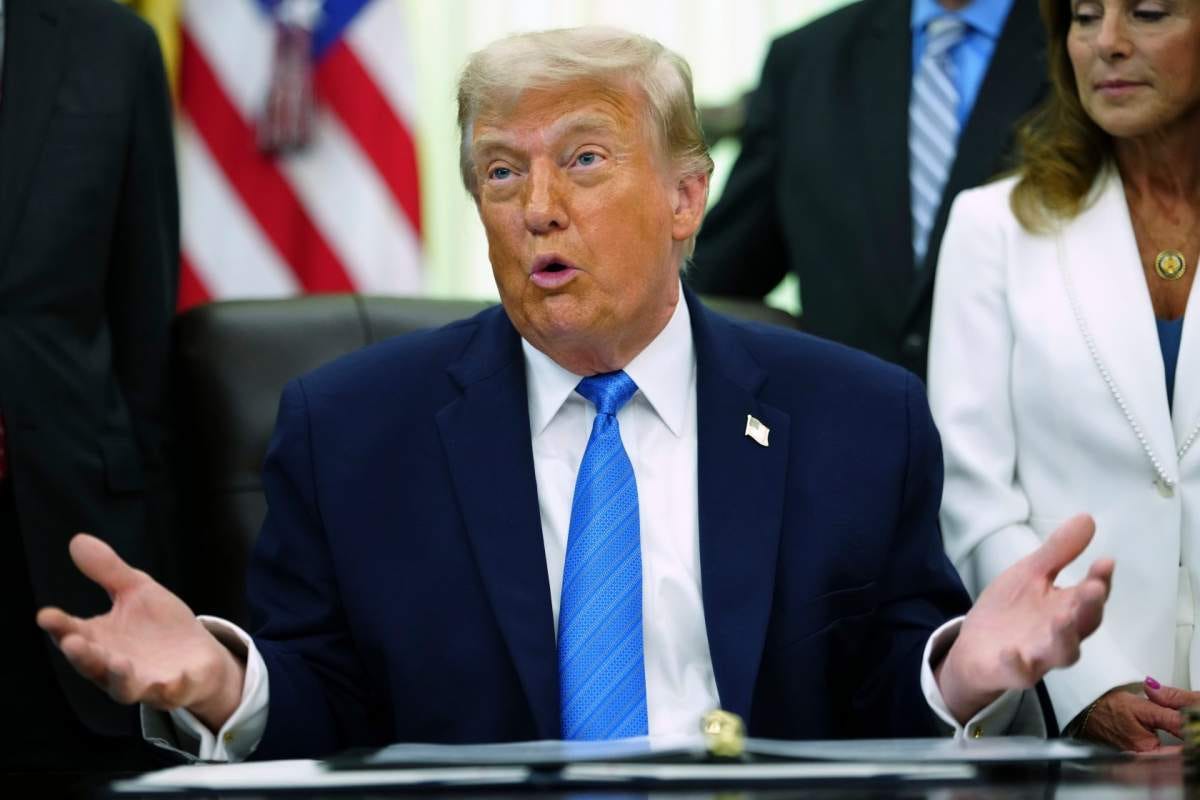
This week, for the first time in months, President Donald Trump directly addressed the future of the Canada-United States-Mexico Agreement (USMCA), known in Canada as CUSMA. And his comments sent immediate shockwaves through political circles, media outlets, and trade observers alike.
Asked whether he was confident the agreement would be renewed, Trump’s answer was blunt.
“I’m not looking to renew it.”
For Canadian officials who have spent months assuring the public that negotiations remain productive, those words landed like a thunderclap.
But as dramatic as the headline sounds, the real story may not be what Trump said. The real story is what he meant.
Trump’s Message Was Bigger Than Trade
The comments themselves were classic Trump.
He argued that the United States does not need Canadian energy, lumber, automobiles, or other exports. He repeated a long-standing complaint that America runs trade deficits with both Canada and Mexico and suggested the United States would be better off without the agreement than accepting a bad deal.
On the surface, those claims are easy to challenge.
Canada remains a major supplier of energy to the United States. American manufacturers continue to rely on Canadian aluminum, critical minerals, and integrated supply chains. Cross-border trade supports millions of jobs in both countries. The economic relationship is deeply interconnected.
Even many American economists would acknowledge that the relationship benefits both sides.
But focusing exclusively on those details risks missing the broader point.
Trump has always approached negotiations through leverage. His strategy is rarely to begin with compromise. Instead, he creates uncertainty, raises the stakes, and forces counterparts to respond.
Viewed through that lens, his comments appear less like an economic analysis and more like a warning shot.
The question is: a warning shot about what?
The China Issue Continues to Loom
If there is one theme that continues to emerge from American officials, trade analysts, and foreign policy experts, it is China.
While Canadian political discourse often focuses on tariffs, softwood lumber disputes, energy exports, or automotive manufacturing, Washington’s concerns increasingly revolve around something much larger: strategic competition with Beijing.
The Trump administration has made no secret of its desire to reduce Chinese influence throughout North America.
From Washington’s perspective, the issue is not simply trade balances. It is whether Canada is aligning itself with American economic and security priorities or moving closer to China’s sphere of influence.
That concern has repeatedly surfaced in discussions surrounding investment, supply chains, critical minerals, technology, and trade policy.
For many observers in Washington, the future of USMCA is increasingly tied to those broader geopolitical questions.
That is why Trump’s remarks should not be interpreted as a simple declaration that America no longer needs Canada.
Rather, they appear to be a message that future trade arrangements may depend on whether Canada demonstrates that it remains a serious strategic partner.
The Communication Gap Is Growing
One of the most frustrating aspects of the current situation is the lack of transparency surrounding negotiations.
Canadians are regularly told discussions are ongoing.
Federal ministers insist conversations are happening. Officials speak of productive engagement. Public messaging suggests progress.
Yet the signals coming from Washington often tell a different story.
American officials have repeatedly indicated that they do not see Canadian negotiators as frequently as Ottawa suggests. Meanwhile, Canadian officials remain tight-lipped about what is actually being discussed behind closed doors.
The result is a growing credibility gap.
Canadians hear that negotiations are advancing, while American voices continue to signal frustration.
Without greater clarity, it becomes increasingly difficult to determine where talks truly stand.
That uncertainty matters because trade negotiations are not occurring in a vacuum. Businesses are making investment decisions today. Manufacturers are making long-term planning decisions today. Markets are watching today.
And uncertainty is expensive.
The Media Narrative Is Already Taking Shape
Predictably, much of the media response to Trump’s comments has focused on one specific claim: his assertion that America does not need Canada.
Over the coming days, Canadians will likely hear countless economists, commentators, and political figures point out the obvious flaws in that argument.
And many of those criticisms will be valid.
The United States absolutely benefits from access to Canadian resources and integrated supply chains.
But there is a danger in stopping the analysis there.
Because if the conversation becomes solely about proving that Trump needs Canadian energy or Canadian lumber, then Canada risks missing the larger strategic issue entirely.
The real question is not whether the United States needs Canada.
The real question is whether the United States believes Canada is acting like the kind of partner it wants beside it in a rapidly changing global economy.
That is a much harder question to answer.
Ottawa’s Challenge Is Growing
The timing could hardly be worse for Prime Minister Mark Carney.
In just days, international leaders will gather for the G7 summit, where trade, security, and geopolitical alignment will dominate discussions.
At the same time, questions about Canada’s economic direction continue to intensify.
For months, Carney’s government has attempted to balance multiple priorities: maintaining access to American markets, expanding relationships elsewhere, and managing an increasingly complex relationship with China.
The challenge is that Washington appears to view those objectives through a much more binary lens.
From the American perspective, economic security and national security are increasingly inseparable.
That means trade negotiations are no longer just about tariffs and quotas. They are about strategic alignment.
And that changes everything.
A Defining Test for Canada
None of this means CUSMA/USMCA is dead.
In fact, Trump’s history suggests dramatic rhetoric is often part of a larger negotiation strategy.
He has frequently used public pressure to create leverage before eventually reaching agreements.
The agreement could still be renewed. Negotiators could still find common ground. Both countries still have enormous economic incentives to maintain stable trade relations.
But Canadians would be wise to recognize that the conversation has evolved.
This is no longer simply a debate about lumber, steel, automobiles, or trade deficits.
It is increasingly a debate about Canada’s place within North America’s economic and security framework.
Trump’s comments may dominate headlines because of their shock value.
But beneath the rhetoric lies a much more important reality: Washington is demanding clarity about where Canada stands.
Whether Ottawa is prepared to provide that clarity may determine not only the future of CUSMA, but the future of Canada’s most important economic relationship.
And with July 1 rapidly approaching, the clock is ticking.
View the full episode here: